Should Curtains Touch the Floor? Design Rules Explained
Discover should curtains touch the floor with our design rules explained. Learn proper lengths, styles, and expert tips for stunning windows.
You've finally found the perfect curtains. The color is spot on, the fabric feels luxurious, and you just know they're going to transform your room. But then comes the question that's stumped homeowners for generations: how long should these beauties actually be?
It's funny how something as seemingly simple as curtain length can spark such heated debates among interior designers and homeowners alike. Some folks swear by the dramatic pooling look where fabric cascades onto the floor like a ball gown. Others insist curtains should hover just above the ground, barely kissing it. And then there's the camp that believes a couple inches of clearance is the only practical choice.
Here's the truth of the matter. There's no single right answer that works for every room, every window, and every lifestyle. What looks stunning in a formal living room might be completely impractical in a busy kitchen. The elegant puddle that photographs beautifully in magazine spreads could become a dust magnet and tripping hazard in your hallway.
Understanding the nuances of curtain length helps you make decisions that balance aesthetics with real-world functionality. Whether you're going for that high-end designer look or simply want windows that don't look awkward, getting the length right makes all the difference.
So let's dive into everything you need to know about curtain lengths. By the time we're done, you'll have the confidence to hang those drapes like a professional decorator, no second-guessing required.
Understanding the Four Standard Curtain Lengths
Before we get into the nitty-gritty of which length works best where, let's establish what options you're actually working with. Interior designers generally recognize four distinct curtain length styles, each with its own personality and practical considerations.
The Float: Quarter Inch Above Floor
This length creates a clean, modern appearance where curtains hang just barely above the floor. We're talking about a quarter inch to half inch of clearance, maximum. The effect is tailored and intentional without any fabric touching the ground.
Floating curtains work wonderfully in contemporary spaces where crisp lines matter. They're also incredibly practical since the fabric stays clean and doesn't get caught under doors or furniture. For households with pets, young children, or anyone who doesn't enjoy constant vacuuming, this length offers the best of both worlds.
The challenge with floating curtains is precision. Getting that perfect almost-touching length requires careful measuring and often some trial and error. Too short and they look like they shrank in the wash. Too long and you've accidentally created a different style altogether.
The Kiss: Just Touching the Floor
When curtains barely graze the floor without any excess fabric, you've achieved what designers call the kiss. This classic length has remained popular for decades because it looks intentional and elegant without demanding excessive maintenance.
Kissing the floor creates beautiful vertical lines that can make ceilings appear higher. The slight contact with the floor grounds the curtains visually, connecting window treatments to the room in a satisfying way. It's a safe choice that rarely looks wrong in any setting.
This length works particularly well in living rooms, dining rooms, and bedrooms where you want sophistication without drama. It says "I know what I'm doing" without shouting about it.
The Break: Slight Pooling
Borrowed from the tailoring world, the break refers to curtains with an extra inch or two of fabric that creates a subtle fold where the curtain meets the floor. Think of it like the break in well-fitted trousers that rest on your shoe.
This length adds a touch of relaxed elegance that feels lived-in rather than rigidly perfect. The small amount of extra fabric softens the overall look and can hide minor measurement imperfections. It's forgiving in a way that floating curtains simply aren't.
Breaking curtains suit transitional and traditional spaces beautifully. They're romantic without being fussy, elegant without being intimidating.
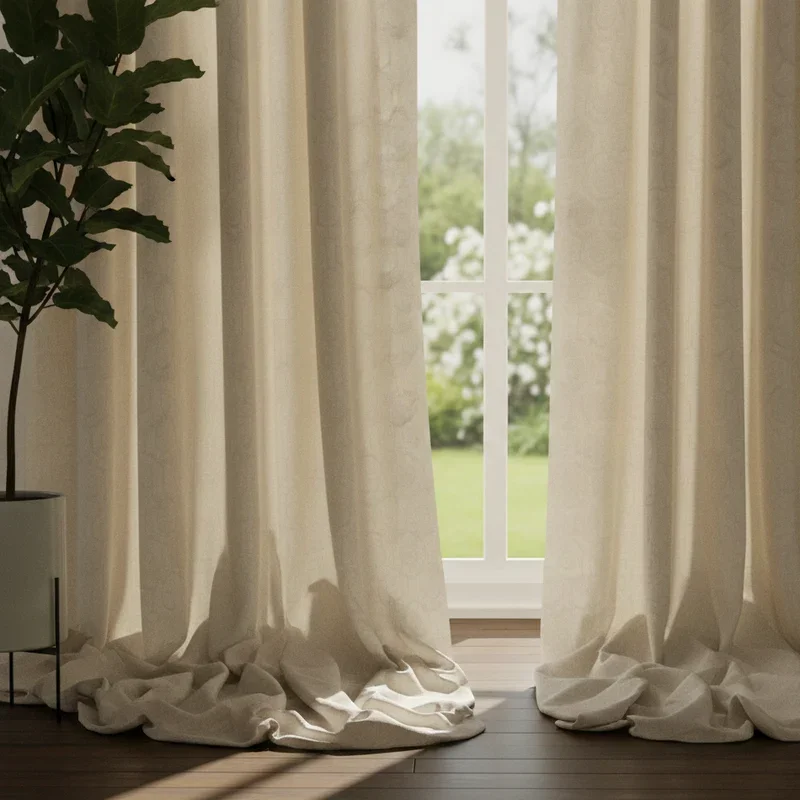
The Puddle: Luxurious Pooling
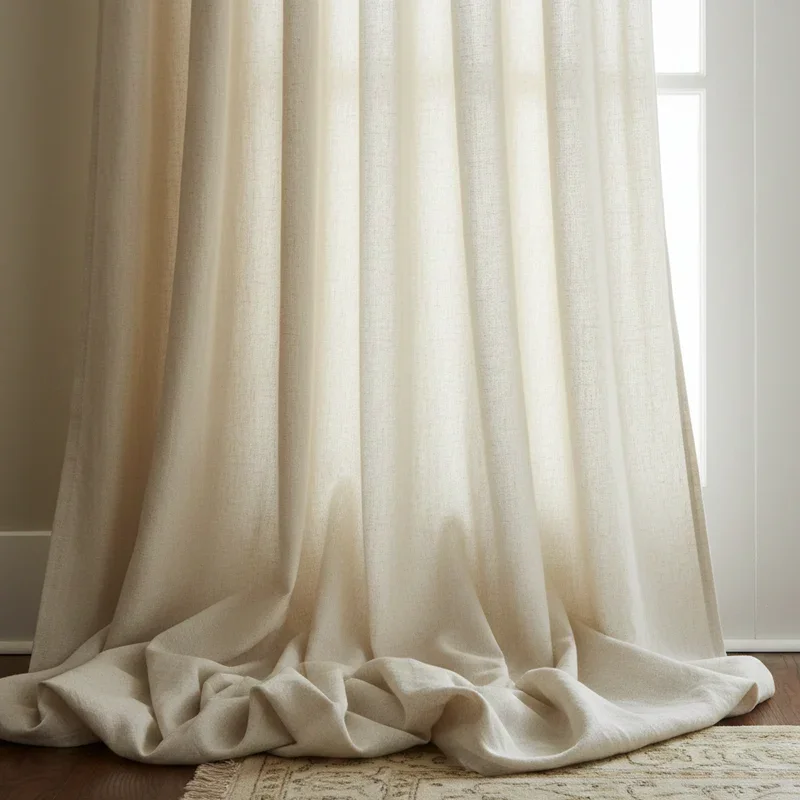
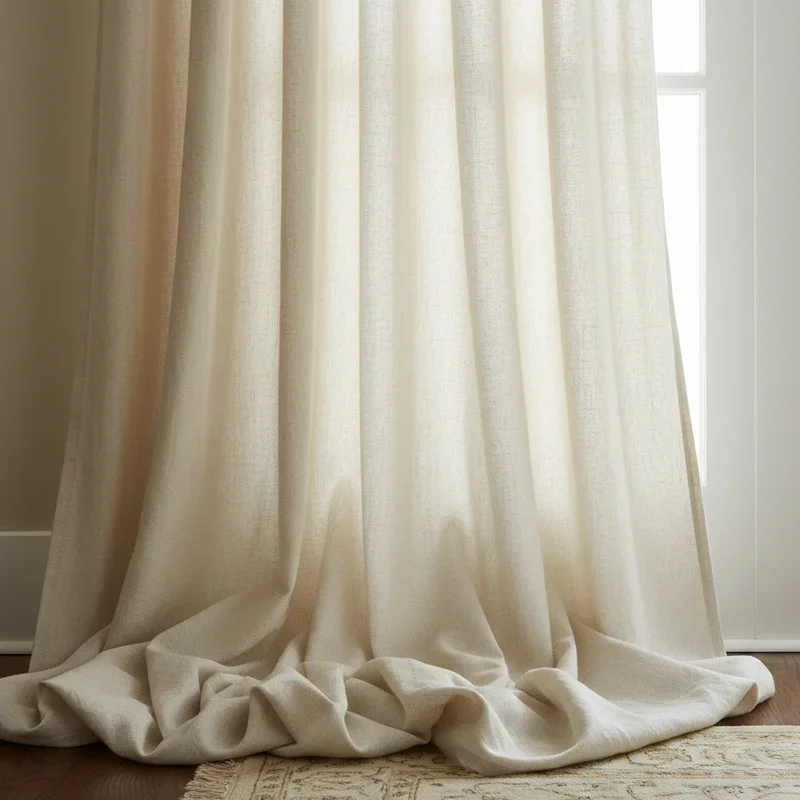
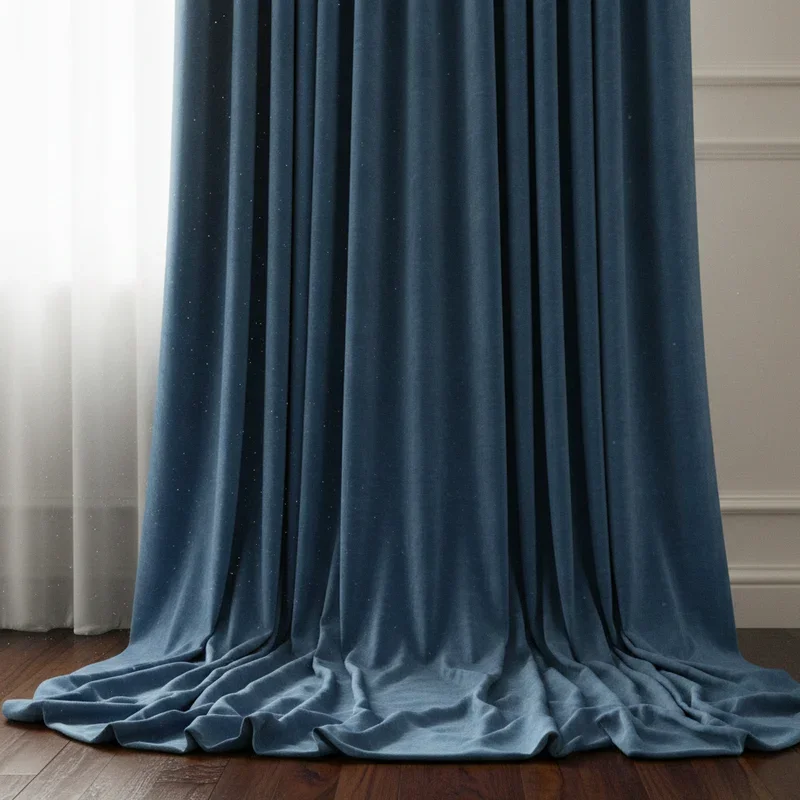
Here's where things get dramatic. Puddle length curtains include anywhere from four to twelve inches of extra fabric that pools gracefully on the floor. This is the look you see in formal rooms, historic homes, and high-end interior design photography.
There's no denying the visual impact of puddling curtains. They create an atmosphere of opulence and old-world glamour that other lengths simply can't match. Flowing silk or velvet pooling beside a window has an almost theatrical quality.
But let's be real here. Puddling curtains are high maintenance. They need regular fluffing to look their best, they collect dust and pet hair like nobody's business, and they're impractical in high-traffic areas. This is a commitment, not a casual design choice.
Should Curtains Touch the Floor? Design Rules Explained by Room
Different spaces call for different approaches. What works in your formal living room might be completely wrong for your bathroom. Let's break down the best options room by room.
Living Room Considerations
Living rooms offer the most flexibility when it comes to curtain length. This is typically a showcase space where aesthetics matter, but it's also a room where people actually spend time. Finding the balance matters here.
For formal living rooms used primarily for entertaining, longer lengths including slight breaking or even modest puddling create impressive visual impact. These spaces often feature higher-quality fabrics that drape beautifully when given extra length.
Casual family rooms benefit from floating or kissing lengths that stay cleaner and resist the chaos of daily life. Kids running around, pets claiming the sunny spot by the window, and frequent foot traffic all argue for more practical lengths.
Bedroom Styling
Bedrooms present an interesting curtain conundrum. You want the space to feel cozy and inviting, possibly even romantic. At the same time, you're probably not spending hours admiring your window treatments while trying to sleep.
Floor-length curtains that kiss or slightly break at the floor work beautifully in bedrooms. They create that soft, enveloping feeling without demanding constant attention. The gentle drape contributes to a restful atmosphere.
Puddling curtains can work in master bedrooms where luxury is the goal, particularly in larger spaces where the dramatic length has room to breathe. However, consider whether you really want to rearrange fabric puddles every time you vacuum or make the bed.
Dining Room Drama
Formal dining rooms practically beg for longer curtains. These spaces are designed for special occasions and entertaining, making them ideal candidates for more dramatic window treatments.
Breaking or puddling lengths complement the formality of a dedicated dining space. Paired with elegant fabrics like silk, velvet, or quality linen, generous curtain lengths help establish the room as somewhere special.
Just keep in mind that dining rooms near kitchens may catch cooking odors and grease. Practical fabrics that clean easily might be worth considering regardless of length.
Kitchen and Bathroom Practicality
Let's address the rooms where should curtains touch the floor becomes a more complicated question. Kitchens and bathrooms present unique challenges that change the calculation entirely.
In kitchens, curtains near cooking areas are fire hazards and grease magnets. Shorter curtain styles like cafe curtains that cover only the bottom half of windows often make more sense. If you do use floor-length curtains in a kitchen, keep them far from stoves and consider washable fabrics.
Bathrooms deal with humidity and moisture that can damage floor-length curtains positioned too close to water sources. Windows near bathtubs or showers typically call for moisture-resistant treatments like blinds or shorter curtain panels.
Factors That Influence Your Decision
Beyond room function, several other considerations should shape your curtain length choice.
Ceiling Height Matters
The height of your ceilings significantly impacts how different curtain lengths read visually. Higher ceilings can accommodate more dramatic lengths without feeling overwhelming. In fact, longer curtains in rooms with high ceilings help bring human scale to otherwise intimidating spaces.
Standard eight-foot ceilings require more careful consideration. Puddling curtains in rooms with lower ceilings can make the space feel cramped rather than elegant. Floating or kissing lengths typically work better here, maintaining clean vertical lines without excessive fabric.
Window Style and Placement
Not all windows are created equal, and their particular characteristics influence ideal curtain length. Floor-to-ceiling windows look natural with floor-length treatments since the curtain simply continues the vertical line of the glass.
Windows positioned higher on walls or windows that don't extend close to the floor present choices. You might use curtains that stop at the window sill, extend to an apron length just below the sill, or go all the way to the floor regardless of where the window actually ends.
The current design consensus generally favors floor-length curtains even for shorter windows because they create the illusion of larger windows and higher ceilings. However, this isn't a hard rule, and practical considerations sometimes override aesthetic preferences.
Heating and Cooling Elements
Here's something people often overlook. What's positioned beneath your windows matters for curtain length decisions. Radiators, baseboard heaters, air conditioning units, and heating vents all affect what length makes sense.
Curtains covering heat sources create fire hazards and reduce heating efficiency. Floor-length panels that block warm air from radiators mean your heating system works harder while your curtains potentially get damaged by heat exposure.
In these situations, sill-length or apron-length curtains might be the wisest choice regardless of aesthetic preferences. Safety and functionality sometimes trump design ideals.
Lifestyle Realities
Be honest with yourself about how you actually live. Do you vacuum religiously and enjoy fussing with decorative details? Or does maintaining your home already feel like a second job you didn't sign up for?
Households with young children, active pets, or simply busy schedules benefit from more practical curtain lengths. There's no shame in choosing floating curtains because you'd rather spend Saturday at the park than arranging fabric puddles.
On the other hand, if creating a beautiful home brings you genuine joy and you have the time to maintain more demanding window treatments, embrace those preferences without apology.
Getting Measurements Right
You've decided on a length style. Now comes the technical part: actually measuring correctly so your curtains end up where you want them.
Measuring for Floating Length
Start by measuring from your curtain rod or track down to the floor. Then subtract a quarter inch to half inch from that total. This clearance keeps curtains from dragging while creating that almost-touching effect.
Consider whether your floors are perfectly level. Older homes especially often have floors that slope or dip. Measure in multiple spots along your window to account for variations.
Measuring for Kissing Length
Measure from rod to floor and use that exact measurement. Sounds simple, but there's a catch. Curtains often hang slightly shorter after installation because of how the fabric folds on the rod or the weight of the material.
Adding about half an inch to your measurement accounts for this phenomenon and usually results in curtains that just barely touch as intended.
Measuring for Breaking or Puddling
Measure rod to floor, then add the extra length you want for your desired effect. One to two inches creates a subtle break. Four inches or more creates a noticeable puddle.
With puddling curtains, more isn't always better. Excessive fabric reads as messy rather than luxurious. Start with less extra length than you think you need, as you can always have curtains lengthened if the effect isn't dramatic enough.
The Design Rules Explained: Breaking Them Intentionally
Here's something important to understand about should curtains touch the floor design rules explained by anyone. Rules in interior design exist to be broken, just not accidentally or ignorantly.
Understanding why certain lengths work in certain situations empowers you to make intentional choices that might technically break the rules while still looking fantastic. A designer who hangs sill-length curtains in a formal dining room because that's what the specific space needs isn't making a mistake. They're making a choice.
The key is intentionality. Curtains that end at a random mid-calf length because someone guessed wrong look like mistakes. Curtains deliberately chosen for a specific purpose look like design decisions, even unconventional ones.
Common Mistakes to Avoid
Certain curtain length errors appear again and again in homes. Knowing what to avoid is half the battle.
Curtains that hover awkwardly several inches above the floor look perpetually wrong, like pants that shrank in the dryer. Either commit to floor length or choose a deliberately shorter option like sill-length. The in-between zone satisfies nobody.
Mixing different lengths in the same room creates visual chaos. If your living room has multiple windows, all the curtains should follow the same length logic even if the windows themselves vary.
Forgetting to account for curtain hardware leads to surprises. Rings, clips, and grommets all add height. Measure from where the fabric actually begins, not from the rod itself.
Conclusion
The question of should curtains touch the floor ultimately depends on your specific room, personal style, and practical needs. Whether you choose floating elegance, the classic kiss, subtle breaking, or dramatic puddling, intentional decisions always look better than accidental ones. Consider your ceiling height, room function, lifestyle, and maintenance willingness before committing. With proper measurements and thoughtful selection, your curtains will enhance every window beautifully while reflecting your unique design sensibility.
Read next: How to Build Kitchen Cabinets: Step-by-Step DIY Guide
Frequently Asked Questions
1.What curtain length is currently most popular among interior designers?
Floor-length curtains that just kiss the ground remain the most universally recommended designer choice.
2.Do short curtains ever look appropriate in modern homes?
Yes, sill-length curtains work perfectly in kitchens, bathrooms, and above radiators or heating units.
3.How do I prevent my curtains from dragging and getting dirty?
Choose floating length with quarter-inch clearance or have longer curtains professionally hemmed to size.
4.Should all windows in one room have matching curtain lengths?
Yes, consistency in curtain length throughout a single room creates cohesive and professional-looking design.
5.Can I use different curtain lengths in different rooms?
Absolutely, each room can have curtain lengths suited to its specific function and design requirements.
Stay up to date with our latest ideas!