How Much Weight Can a Glass Shelf Hold Safely?
Wondering how much weight can a glass shelf hold safely? Learn about thickness, types, brackets, and load limits here.
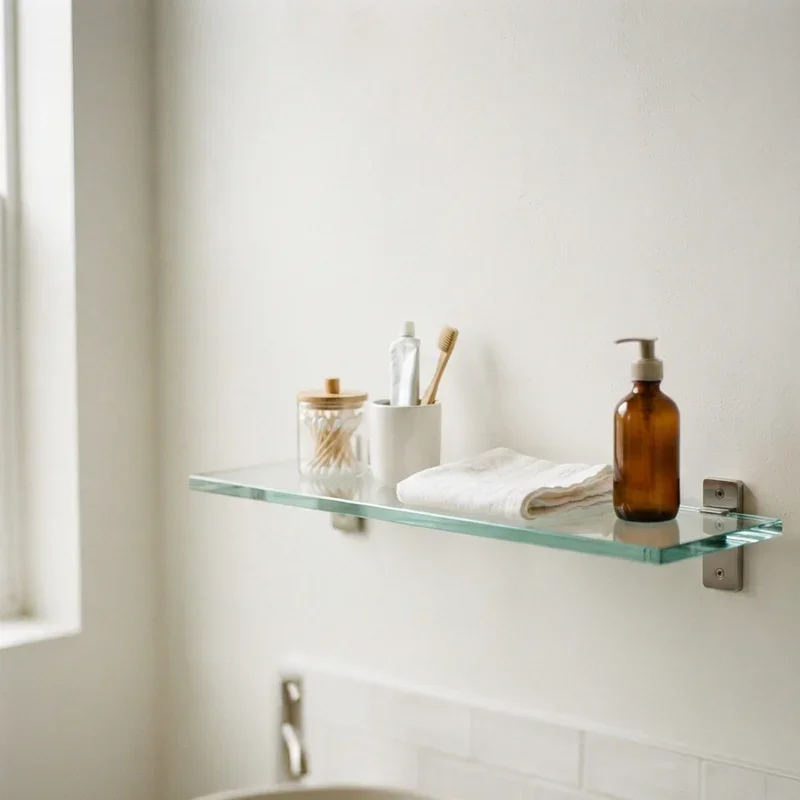
So you have just picked up a gorgeous glass shelf from the store, and now you are standing in your living room holding it, staring at the wall, and asking yourself one very important question. How much stuff can I actually put on this thing before it turns into a pile of expensive shards on my floor? It is a fair concern, and honestly, more people should be asking it before they start loading up their shelves with heavy decor and book collections.
Glass shelves bring a sleek, modern look to just about any space. They make rooms feel more open, they let light pass through beautifully, and they have this elegant quality that wood and metal shelves simply cannot replicate. But that beauty comes with a tradeoff that makes a lot of folks nervous. Glass looks fragile, and nobody wants to come home to a disaster because they underestimated the limits of their shelving.
Here is the thing though. Glass is actually a lot stronger than most people give it credit for. The key is understanding what type of glass you are working with, how thick it is, how it is supported, and what you are planning to place on it. Once you wrap your head around these factors, you can use your glass shelves with complete confidence and zero anxiety. Let us break it all down so you never have to second-guess yourself again.
Understanding Glass Strength Basics
Before we jump into specific numbers, it helps to understand a little bit about how glass behaves under pressure. Glass is what materials scientists call a brittle material, which means it does not bend or flex much before it breaks. Unlike wood, which can bow and sag gradually under heavy loads, glass tends to hold firm right up until the point where it suddenly gives way. There is not much warning involved.
That said, the amount of force needed to reach that breaking point can be surprisingly high, especially with modern glass types designed specifically for load-bearing applications. The strength of a glass shelf depends on a handful of variables working together, and changing just one of them can dramatically shift how much weight it can safely support.
Think of it like a chain where every link matters. The glass type, the thickness, the width and depth of the shelf, the number and placement of supports, and even the way weight is distributed across the surface all play critical roles. Ignore any one of these factors and you could be setting yourself up for trouble.
How Much Weight Can a Glass Shelf Hold Safely? The Numbers
Alright, let us get into the specifics that everyone really wants to know. The weight capacity of a glass shelf varies considerably based on its characteristics, but here are some general guidelines that apply to standard tempered glass shelves with proper bracket support on both ends.
A 12-inch deep tempered glass shelf that is 24 inches wide and 3/16 inch thick can typically hold around 10 to 15 pounds safely. Bump that thickness up to 1/4 inch and you are looking at roughly 15 to 30 pounds for the same dimensions. Go all the way to 3/8 inch thick tempered glass at that size and the capacity jumps to somewhere around 30 to 45 pounds.
For longer shelves, the numbers change quite a bit. A 36-inch wide shelf needs to support its own weight across a greater span, which reduces how much additional load it can carry. The same 1/4 inch tempered glass that held 30 pounds at 24 inches might only safely hold 15 to 20 pounds when stretched to 36 inches. Physics is not doing you any favors on longer runs.
These figures assume the weight is evenly distributed across the entire shelf surface. Start piling everything into one corner or placing a single heavy object right in the center, and those safe limits drop considerably. Weight distribution matters enormously with glass, perhaps more than with any other shelving material.
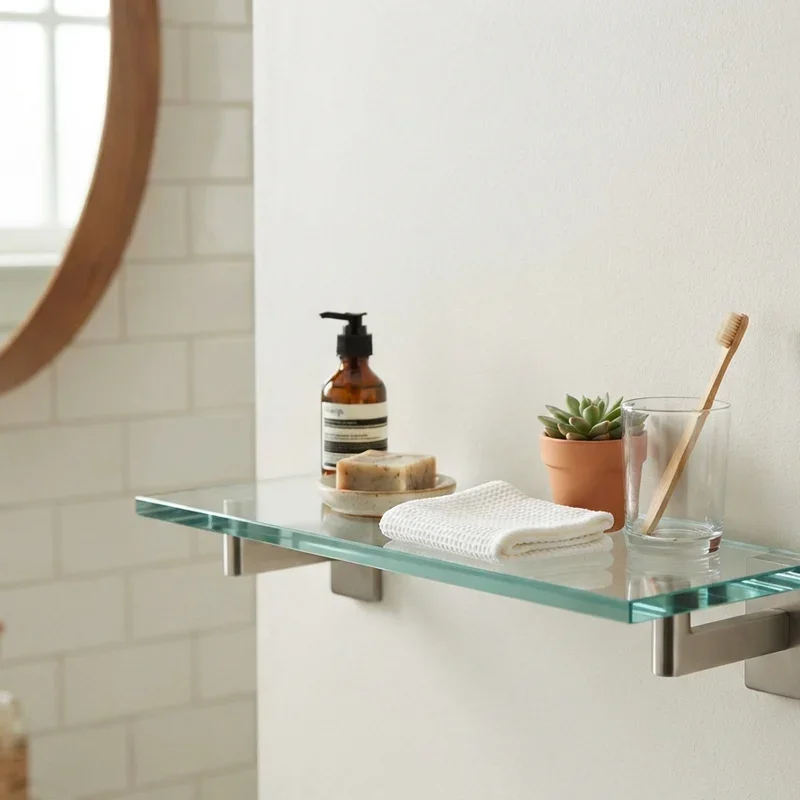
Types of Glass and How They Compare
Not all glass is created equal, and the type you choose has a massive impact on how much weight your shelf can handle. Let us run through the main players so you know exactly what you are dealing with.
Annealed Glass
This is your standard, run-of-the-mill glass. It is the most basic type and also the weakest option for shelving purposes. Annealed glass has not undergone any special treatment to increase its strength, and when it breaks, it shatters into large, jagged pieces that can cause serious injury. For shelving applications, annealed glass is generally not recommended unless the shelf is purely decorative and will hold almost nothing. We are talking a few small picture frames at most.
Tempered Glass
Tempered glass is the workhorse of the glass shelving world. It is created by heating annealed glass to extremely high temperatures and then rapidly cooling it, a process that makes it roughly four to five times stronger than regular glass. When tempered glass does break, it crumbles into small, relatively harmless granules instead of dangerous shards.
Most commercially available glass shelves are made from tempered glass, and for good reason. It offers a solid balance of strength, safety, and affordability that makes it suitable for everything from bathroom shelves to retail display cases. If someone is asking how much weight can a glass shelf hold safely, they are almost certainly talking about tempered glass.
Laminated Glass
Laminated glass takes things up another notch. It consists of two or more layers of glass bonded together with a plastic interlayer, usually polyvinyl butyral. This construction gives laminated glass superior strength and the added safety benefit of holding together even when cracked. The broken pieces stick to the plastic layer instead of falling apart.
Laminated glass shelves can handle more weight than comparable tempered glass shelves, making them a smart choice for heavier applications. You will find them in commercial settings, museums, and high-end residential installations where both strength and safety are paramount.
Toughened Laminated Glass
For the ultimate in glass shelf performance, toughened laminated glass combines the strengthening process of tempering with the layered construction of lamination. These shelves are incredibly strong and are used in situations where failure is simply not an option. They cost significantly more than standard tempered glass, but for heavy-duty applications, the investment is well worth it.
Why Thickness Is a Game Changer
If there is one single factor that influences glass shelf capacity more than anything else, it is thickness. The relationship between thickness and strength is not linear either. Doubling the thickness of a glass shelf does not just double its strength. It actually increases it by roughly a factor of four, thanks to the way physics works with flat materials under load.
Here is a quick rundown of common glass shelf thicknesses and their typical applications.
3/16 inch (5mm) glass is the thinnest option you will commonly encounter. It works fine for lightweight decorative items, small plants in light pots, and the occasional picture frame. Think of it as the shelf for things that barely weigh anything.
1/4 inch (6mm) glass is the most popular choice for residential shelving. It offers a good balance of strength and aesthetics and can handle moderate loads when properly supported. Bathroom shelves, small bookcases, and display cabinets typically use this thickness.
5/16 inch (8mm) glass steps things up for applications where you need a bit more muscle. It is common in retail environments and home entertainment centers where the load demands are higher than a typical bathroom shelf but not extreme.
3/8 inch (10mm) glass is where things start getting serious. Shelves at this thickness can support substantial weight and are often used for kitchen shelving, bar displays, and situations where heavier objects need a home.
1/2 inch (12mm) glass is the heavy hitter. At this thickness, glass shelves can support significant loads and are used in commercial displays, trophy cases, and high-end custom installations. They are noticeably heavier themselves though, which means your wall brackets and mounting hardware need to be up to the task as well.
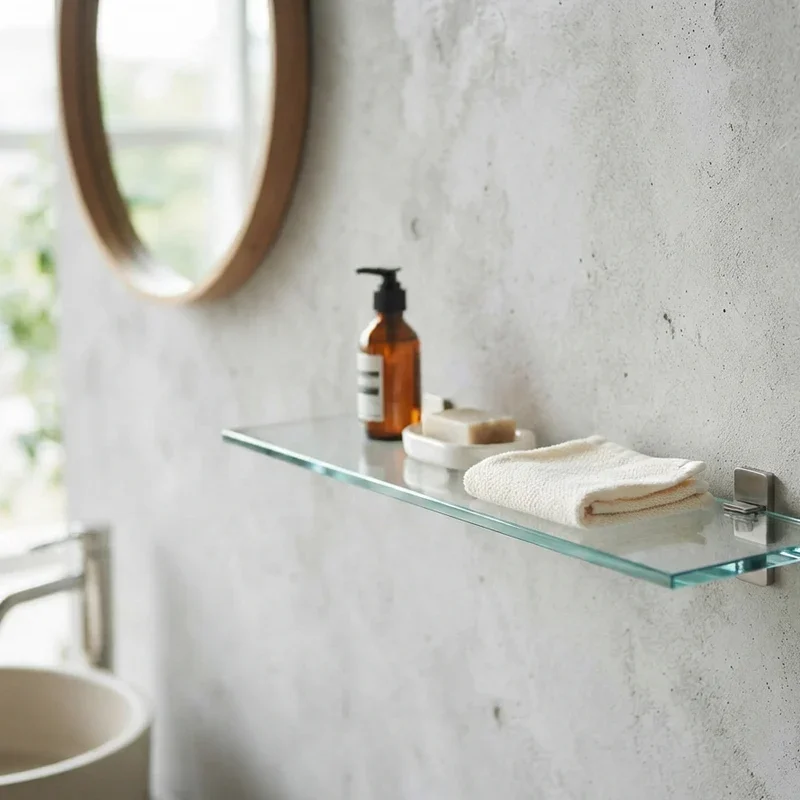
The Critical Role of Brackets and Supports
You could have the strongest glass shelf in the world, but if your brackets are flimsy or poorly installed, you are asking for trouble. The support system is every bit as important as the glass itself, and cutting corners here is a recipe for disaster.
Types of Shelf Supports
Floating shelf brackets that grip the glass from below are among the most popular options for residential use. They provide a clean, minimalist look and distribute the load along the length of the bracket contact area. However, they typically support less weight than more robust mounting options.
Fixed wall brackets with rubber or silicone cushions offer stronger support and are better suited for heavier applications. The cushioning material serves double duty by preventing the glass from directly contacting the metal bracket, which reduces the risk of stress fractures, and by adding a bit of friction that keeps the shelf from sliding.
Channel-style supports that run the full length of the shelf's back edge provide the most support of any bracket type. By distributing the load across the entire rear edge of the glass, they minimize stress concentrations and allow the shelf to carry significantly more weight than point-load brackets.
Mounting Into the Right Surface
What your brackets are attached to matters just as much as the brackets themselves. Mounting into solid wood studs gives you the strongest possible connection and the highest weight capacity. If you are screwing into drywall alone, even with anchors, your maximum safe load drops dramatically. Heavy-duty toggle bolts are better than plastic anchors for drywall mounting, but they still cannot match the holding power of a solid stud connection.
For masonry walls, proper concrete anchors rated for the expected load are essential. Brick and concrete can support tremendous weight when the right fasteners are used, making them excellent surfaces for glass shelf installations that need to carry heavier items.
How Weight Distribution Affects Capacity
This is something that catches a lot of people by surprise. Where you place objects on a glass shelf matters almost as much as how much those objects weigh in total. An evenly distributed 20-pound load across a shelf is a completely different scenario than a single 20-pound object sitting right in the center.
When weight is concentrated in one spot, it creates what engineers call a point load. This concentrated force generates much higher stress in the glass at that specific location compared to the same total weight spread evenly. The center of the shelf between supports is the weakest point, and placing heavy objects there puts maximum stress on the glass right where it is most vulnerable.
Spreading weight evenly across the entire surface keeps stress levels uniform and allows the shelf to perform at its rated capacity. If you must place a heavier item on a glass shelf, positioning it directly above or very close to a bracket support point dramatically reduces the stress on the glass.
This is why retail stores that use glass shelving are so careful about their display arrangements. Those perfectly spaced products are not just about aesthetics. They are about distributing weight safely across the shelf surface.
How Much Weight Can a Glass Shelf Hold Safely in Different Rooms?
The answer to how much weight can a glass shelf hold safely depends partly on where you plan to use the shelf and what you intend to store on it. Different rooms come with different demands, and matching your glass selection to the specific application is crucial.
Bathroom Shelves
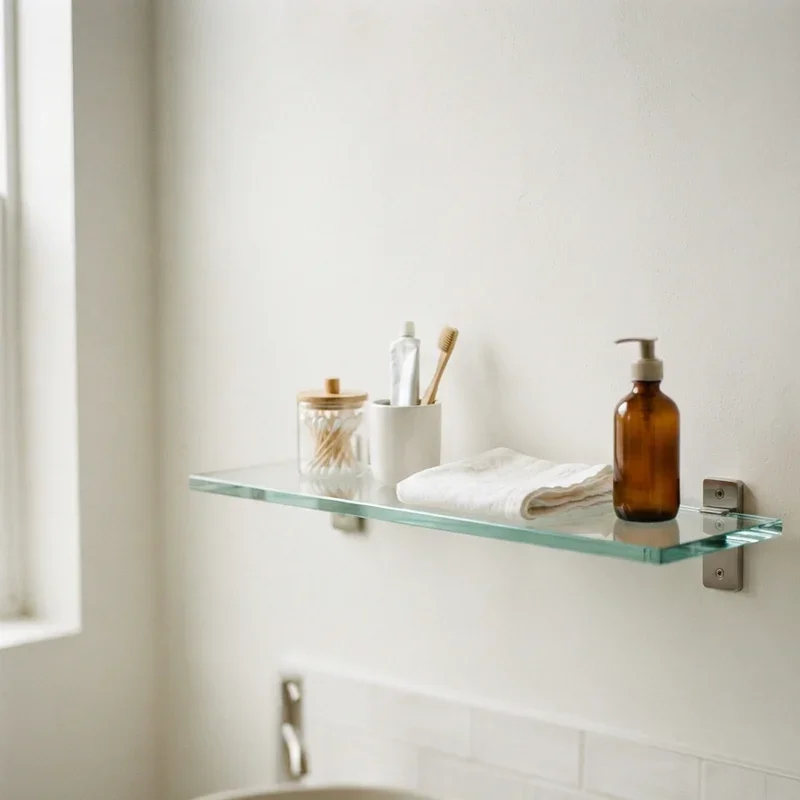
Bathroom glass shelves are typically among the lightest-duty applications in a home. They hold toiletries, small plants, candles, and decorative items that rarely add up to much weight. A standard 1/4 inch tempered glass shelf with two bracket supports is usually more than adequate for bathroom use. Just keep in mind that full bottles of shampoo, conditioner, and lotion can add up quicker than you might expect.
Living Room Display Shelves
Living room applications tend to be more demanding. Decorative objects, framed photos, small sculptures, and collectibles can accumulate significant weight, especially on wider shelves. For living room displays, 1/4 inch to 3/8 inch tempered glass is typically appropriate, with bracket spacing tailored to the expected load.
Kitchen Shelves
Kitchens present some unique challenges for glass shelving. Dishes, glasses, and small appliances are heavier than most people realize, and kitchen shelves tend to get loaded up over time as collections grow. For kitchen applications, 3/8 inch tempered glass at a minimum is a wise choice, with supports spaced closely enough to prevent excessive spans.
Retail and Commercial Displays
Commercial environments demand the highest performance from glass shelves. Products on retail shelves can be surprisingly heavy, and the consequences of a shelf failure in a store go well beyond just broken glass. Commercial installations typically use 3/8 inch to 1/2 inch tempered or laminated glass with heavy-duty support systems designed and rated for specific load requirements.
Common Mistakes That Lead to Glass Shelf Failures
Understanding what goes wrong helps you avoid making the same mistakes yourself. Most glass shelf failures are not caused by defective glass. They are caused by human error during installation or use.
Overloading is the most obvious culprit, but it usually happens gradually rather than all at once. People add one more item, then another, then another, until the shelf is carrying far more than it was designed to hold. Keeping a rough mental tally of what you are placing on your shelves helps prevent this creeping overload.
Using the wrong bracket type or failing to secure brackets properly into wall studs is another common problem. Brackets that are rated for lighter loads or that are only anchored into drywall can fail suddenly under weight that the glass itself could have handled just fine.
Ignoring chips and scratches on glass shelves is a mistake that many people make without realizing the risk. Even small surface damage can create stress concentration points that weaken the glass significantly. A tempered glass shelf with a chip on its edge might only hold a fraction of its rated capacity because that tiny defect becomes the starting point for a crack under load.
Placing glass shelves near heat sources or in direct sunlight can also cause problems over time. Temperature differentials across the glass surface create internal stresses that reduce its load-bearing ability. Keeping glass shelves away from radiators, heating vents, and prolonged direct sun exposure helps maintain their structural integrity.
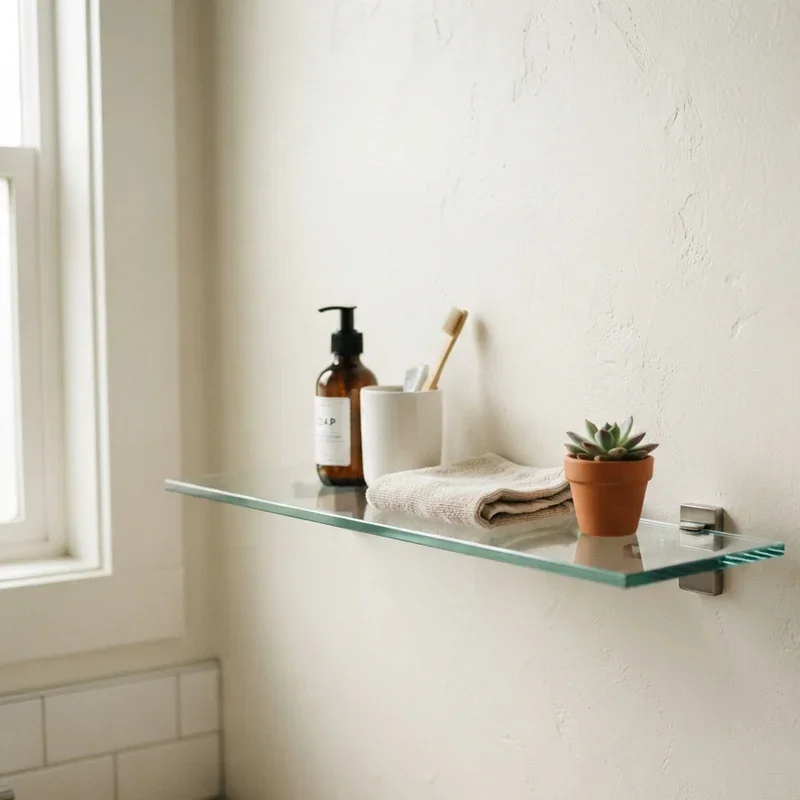
Tips for Maximizing Your Glass Shelf's Load Capacity
Getting the most out of your glass shelves does not require an engineering degree. A handful of practical tips can make a significant difference in how much weight your shelves handle safely.
Always choose tempered glass at minimum for any shelf that will carry more than just a decorative accent piece. The strength advantage over annealed glass is substantial and the safety benefits when it comes to breakage patterns are well worth any additional cost.
Add a center support bracket for any shelf wider than 24 inches. That extra point of contact cuts the unsupported span in half and dramatically increases the shelf's effective capacity. It is one of the simplest and most cost-effective upgrades you can make.
Use rubber or silicone pads between the glass and any metal contact points. These cushions prevent direct glass-to-metal contact that can create stress risers and lead to premature failure. Most quality bracket systems include them, but if yours did not, adding them yourself is easy and inexpensive.
Keep heavy items toward the back of the shelf where they are closer to the wall support. This shifts the load vector more favorably and reduces the bending moment on the glass compared to placing heavy objects at the front edge.
Inspect your shelves periodically for any signs of damage. Run your finger along the edges feeling for chips or rough spots that were not there before. If you find any significant damage, replace the shelf rather than risking a failure under load. Peace of mind is always worth the cost of a new piece of glass.
Conclusion
Knowing how much weight can a glass shelf hold safely comes down to understanding thickness, glass type, bracket quality, and weight distribution. A standard 1/4 inch tempered glass shelf properly supported can handle 15 to 30 pounds comfortably, while thicker options carry considerably more. Always mount brackets into studs, distribute weight evenly, and inspect your shelves regularly for damage. With the right setup and a little common sense, glass shelves are both beautiful and perfectly reliable for everyday use.
Read next: How to Remove Mold from Tile Grout
Frequently Asked Questions
1.How much weight can a 1/4 inch tempered glass shelf hold?
A properly supported 1/4 inch tempered glass shelf typically holds between 15 and 30 pounds safely.
2.Is tempered glass strong enough for kitchen shelving?
Tempered glass works for kitchens, but choose 3/8 inch thickness or greater for heavier dish loads.
3.Can I use regular annealed glass for shelves?
Annealed glass is not recommended for shelves because it is weak and shatters into dangerous sharp pieces.
4.Do glass shelf brackets need to go into wall studs?
Yes, mounting brackets into wall studs provides the strongest hold and highest safe weight capacity overall.
5.How do I know if my glass shelf is overloaded?
Visible bowing, creaking sounds near brackets, or new edge chips are warning signs of dangerous overloading.
Stay up to date with our latest ideas!